In my work, I am interested in the tension between nature, art, and science. I am particularly concerned with the question of the limits of what can be expressed by both art and science, and whether both the artistic perspective and the scientific perspective can perhaps interpret the manifestations of the living world more completely and comprehensively together. How much of art form is inherent in the natural form? – Attempting to answer this question is a central concern of mine.
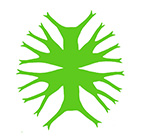
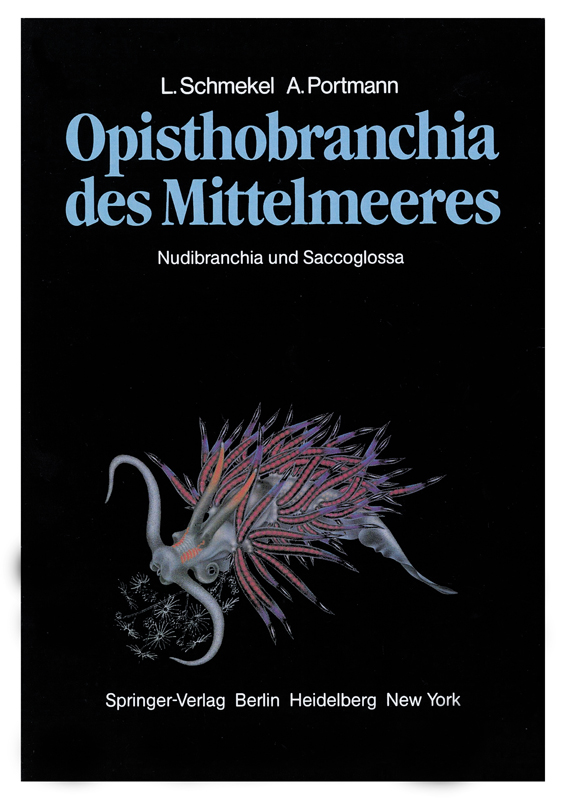
Adolf Portmann (1897–1982) was a Swiss biologist who conducted research on opisthobranchs (sea slugs) at marine biological laboratories in Banyuls-sur-Mer, Villefranche, Roscoff, and Helgoland, and who was appointed professor of zoology at the University of Basel in 1931. He worked interdisciplinarily and made fundamental contributions to marine zoology, morphology, anthropology, and behavioral biology. One recurring theme in Portmann's research and publications is the external appearance of animals. Portmann proposed the highly controversial thesis, even during his lifetime, that the surface design of animals cannot be easily explained by their adaptive value alone.His interest in marine nudibranchs, which he felt almost magically drawn to, culminated in the publication of Opisthobranchia of the Mediterranean in 1982, together with his long-time collaborator Luise Schmekel (Fig. 1).
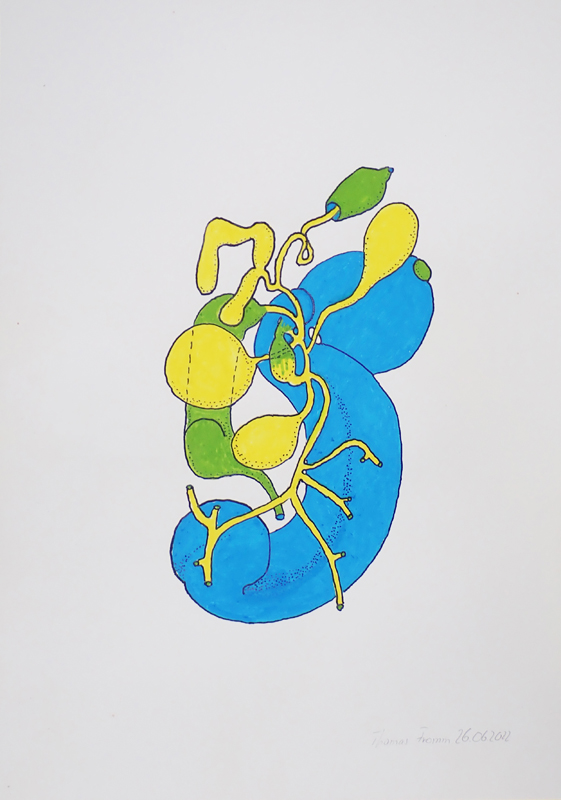
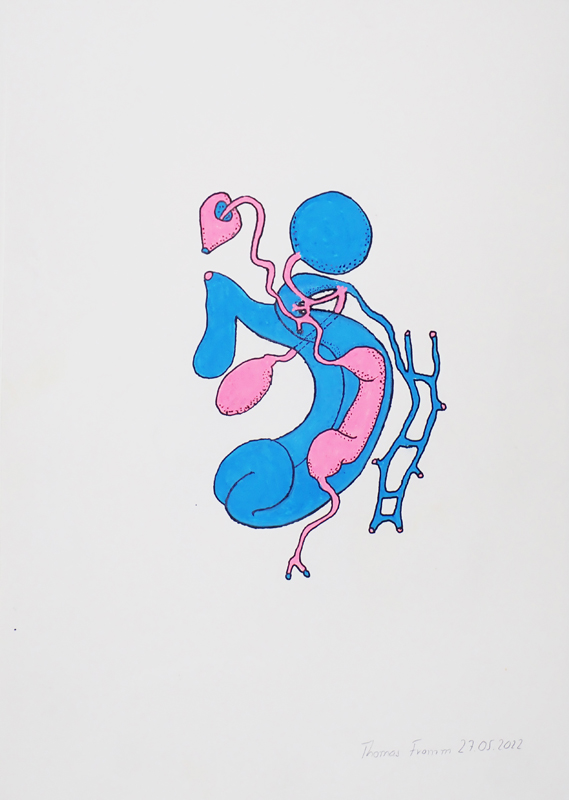
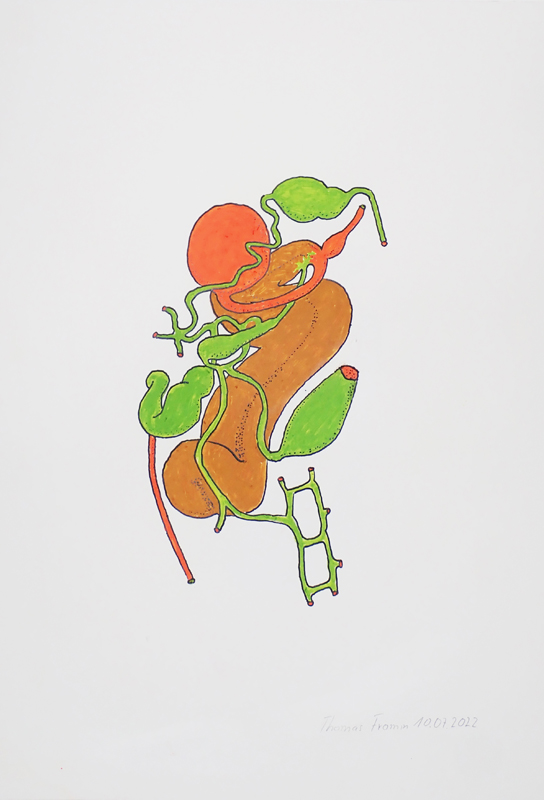
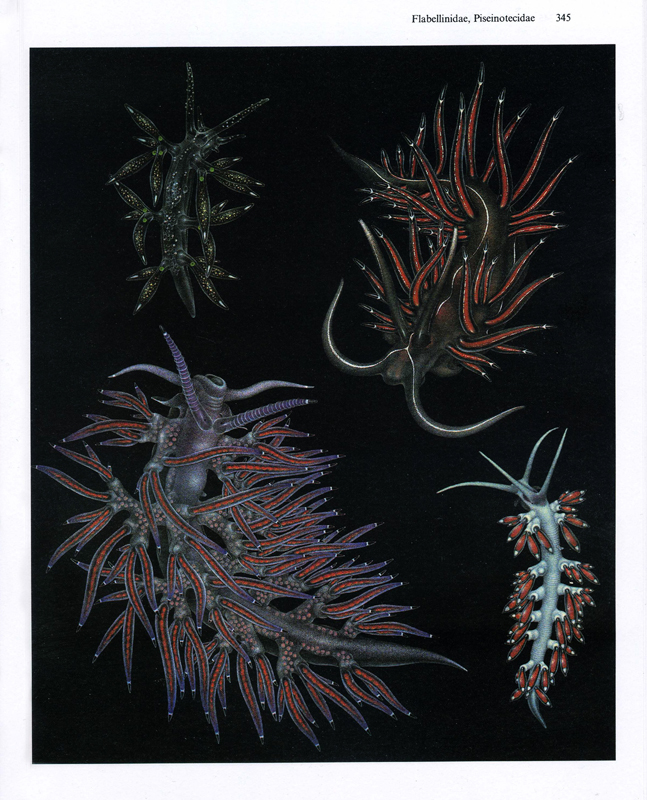
Marine opisthobranchs are hermaphrodites, possessing gonads that function as both testes and ovaries, producing both sperm and eggs. Since self-fertilization is always to be avoided, germ cells are not produced simultaneously, with sperm usually produced before eggs. This typically happens in different regions of the gonad. These small animals, only a few millimeters to centimeters in size, are extraordinarily brightly colored (Fig. 2) and always require a copulation partner for reproduction, allowing fertilization via a penis. Sometimes, an individual will have multiple copulation partners, necessitating that the sperm from different partners be stored and kept alive in separate vessels. In addition, special glands and organs provide the eggs with nutrients and, if necessary, enclose them in a shell before they are laid.
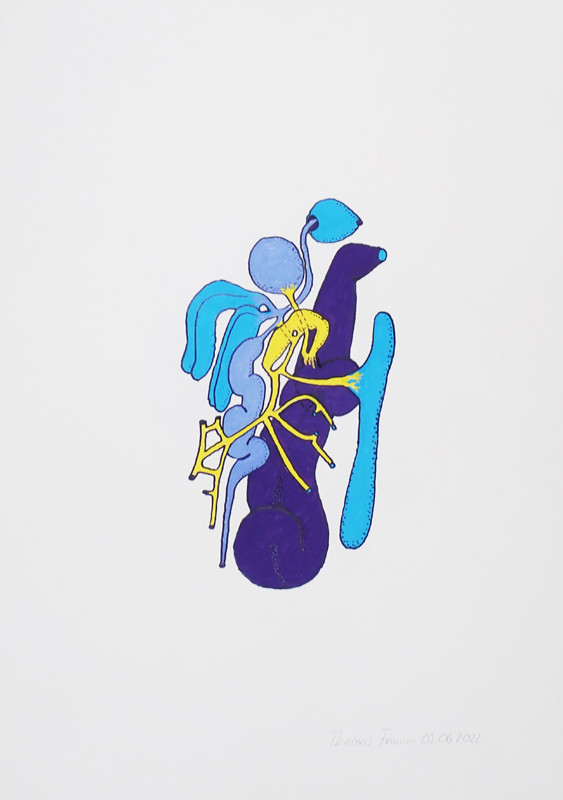
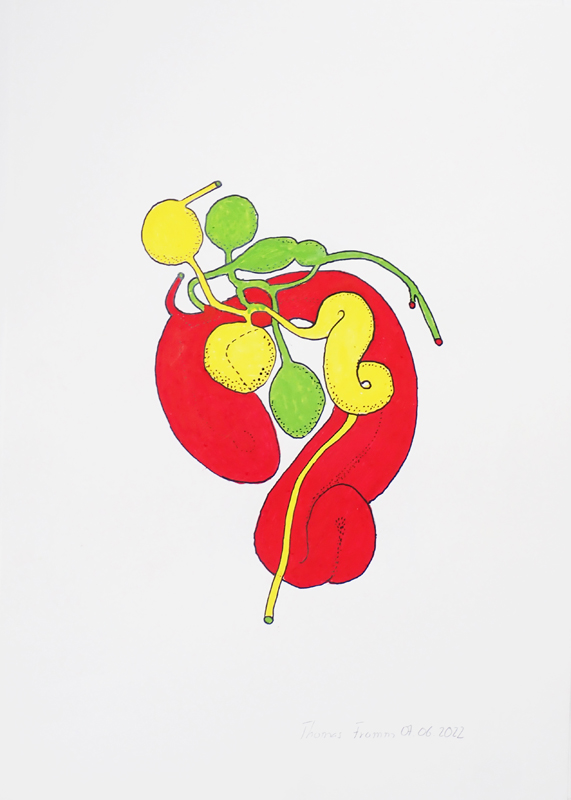
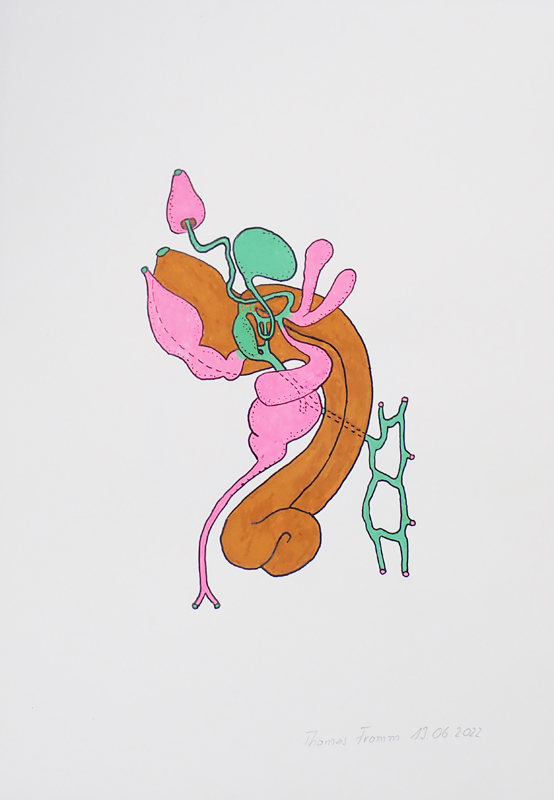
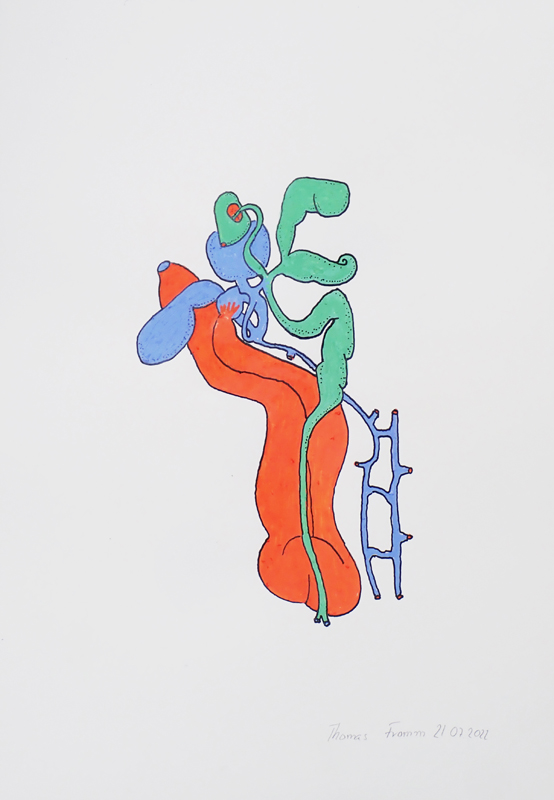
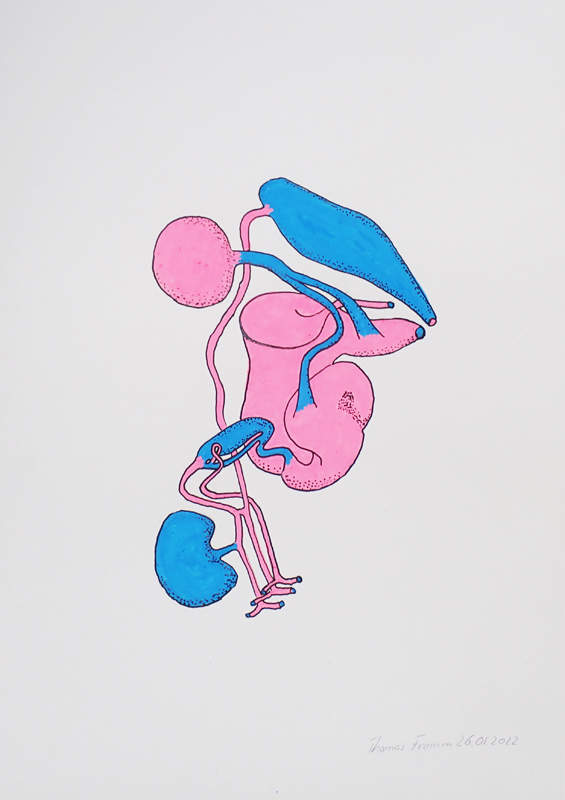
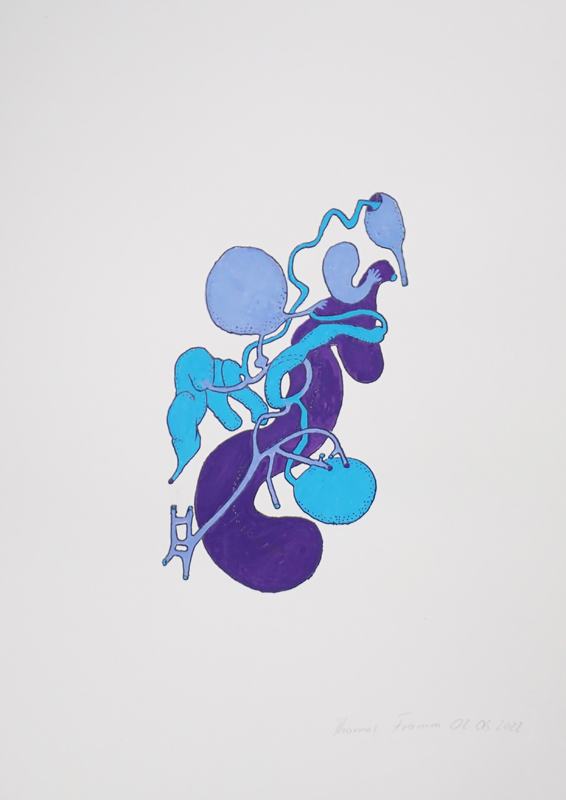
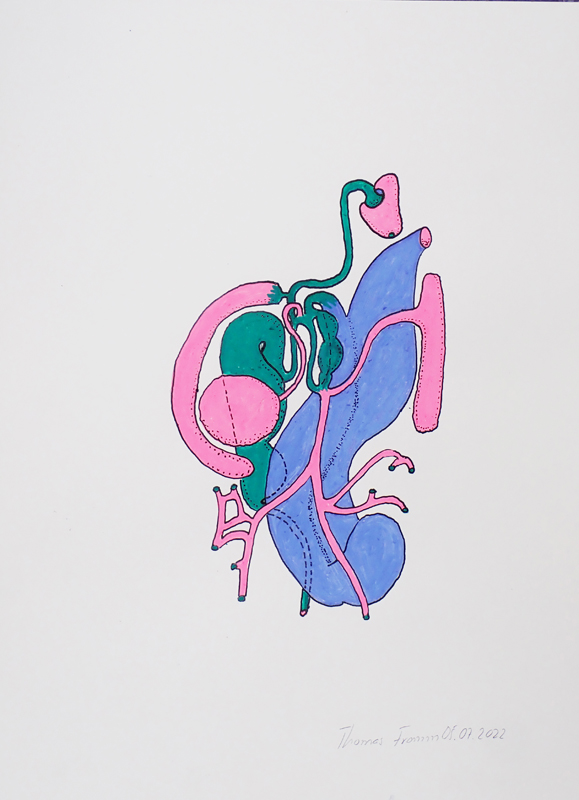
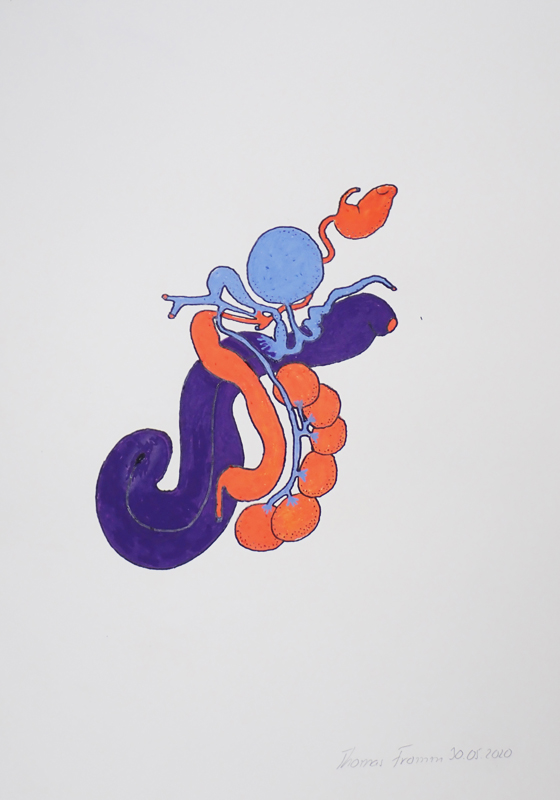
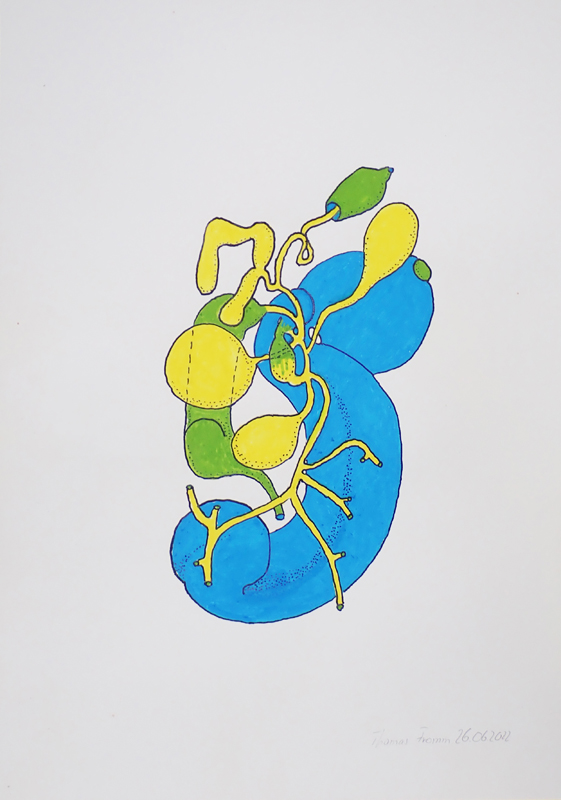
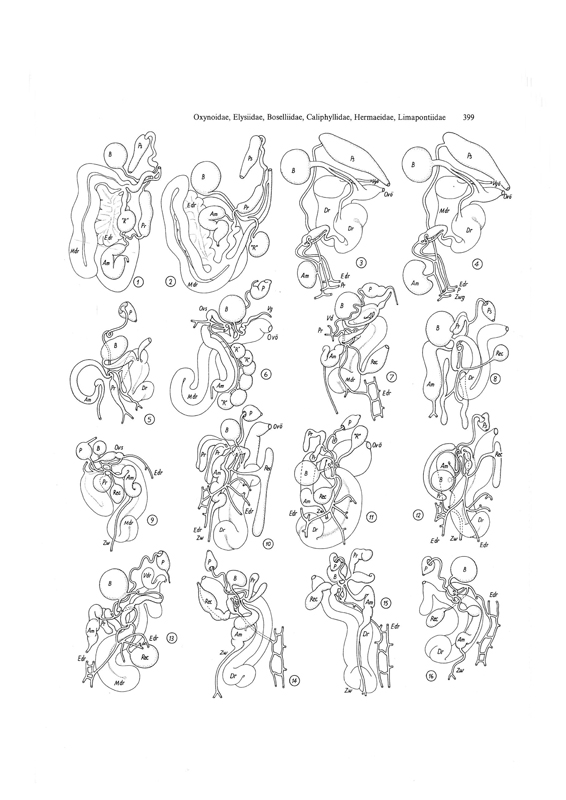
"The scientist has crutches, the artist has wings," is a famous quote by the Cubist Georges Braque (1882–1963). This exhibition aims to illustrate this quote: by omitting the labels from the original drawings of the genitalia of individual species (the "crutches" in Fig. 3) and then scaling and coloring them, the already erotically, "slippery," and playful-looking structures take on a new quality that undoubtedly deserves the label of art. Here, design becomes an inherent, entirely natural will to expression within the living substance itself. Through a seemingly miraculous process of transformation, the scientifically studied natural form suddenly reveals itself as true art, rising on wings it has always had, allowing nature to appear as an artist herself.